
Showing posts sorted by relevance for query construction. Sort by date Show all posts

Wednesday, March 14, 2007

The rise and fall of Construction in cartoons Pt 3 - 1950s - Undertures and corners

This is part 1 of the Disney 50s: Undertures
Part 2 will be: stock "cartoony" construction
part 3 will be: UPA influence/ Tom Oreb/Ward Kimball-The Cal Arts New Testament
Part 4 will be: combining UPA with rubber hose-the most successful use (to me) of UPA influence at Disney.


Undertures:

Disney continued making their main characters "undertures", that is - designs that are less cartoony, interesting or individual than live humans. This Prince from Cinderella is the worst of the type, because there is no visible construction in it. The facial features just float inside the inspecific silhouette of his face. This inspecificity of construction makes it very hard to animate. It means the features will have a tendency to float around, because they are not clearly set into specific forms.
Alice is an underture, but her construction is still mildly visible. She is still based on Elmer Fudd/ Preston Blair baby construction.

You can see her cheeks bulge out and her eyes fit into them.

There is no specific individual design to the character. She is pure generic. She is construction alone, with no individual variations on the basic Disney forms.
Wendy is the exact same design (or lack of design) as Alice. She still has a bit of visible construction. She has a definite chin, jaw and cheek. (Today's Disney designs don't. The mouths and eyes just float around independent of the silhouette of the head and jawline)
Aurora is sthe same design as Alice and Wendy, with taller proportions and a slightly more anglular finish. The angles make 3-dimensional sense unlike today's wobbly pointy copies of this style.

She is animated beautifully, with the help of rotoscoping and Marc Davis' fantastic skill, but the most you can say about it is that it is smooth and solid. It's a hell of a lot of trouble to go to for the mere result of not looking clumsy.

No one today could animate humans without the features floating all over the place and the construction shifting and melting as the character tries to turn in 3 dimensions. I don't know why anyone even tries, since the best you can get with "realistic" design is merely: "It didn't look awkward." Unfortunately, today there are no Marc Davis' at studios that spend a lot of money and 20 years training you to do extreme solid animation that isn't clumsy.

Here is an extreme underture animated by the great Milt Kahl. Even Milt himself hated animating this and complained all through the production. He wanted to go back to the old sensible days of animating cartoony characters like Br'er Rabbit.

This is the only male realistic character I have ever seen that is animated smoothly, without melting all over the screen or looking completely awkward. Yet much less capable animators than Kahl in eras that are much less disciplined than mid century America keep attempting it.This looks like Dic took over Disney.

Can someone explain why?? No one likes to animate stuff like this and it only worked the one time-and didn't work at all in the context of the film itself:
Next installment: 50s construction of "cartoony" characters at Disney's. Using the same stock construction for countless characters.

Monday, September 17, 2007

Cartoon College Year 1: My Ideal Cartoon School


This course is designed to make the graduates as skilled as possible.

On top of that, they would be trained to be extremely observant and analytic. They would be able to adapt to many drawing styles, because they would know the difference between what is a universal drawing principle and what is a superficial stylistic habit.

It doesn't matter if you plan to be a 2d animator, CG animator or even a Flash animator, these skills will put you at the top of your chosen branch of animation.

It's also designed to inspire the cartoonists to enjoy the immense potential of creativity that is possible when you combine skill, imagination and fun.


1st year

1) 1st Principles of Cartoon Drawing

Basic Construction

Traditional Animated Cartoon construction:

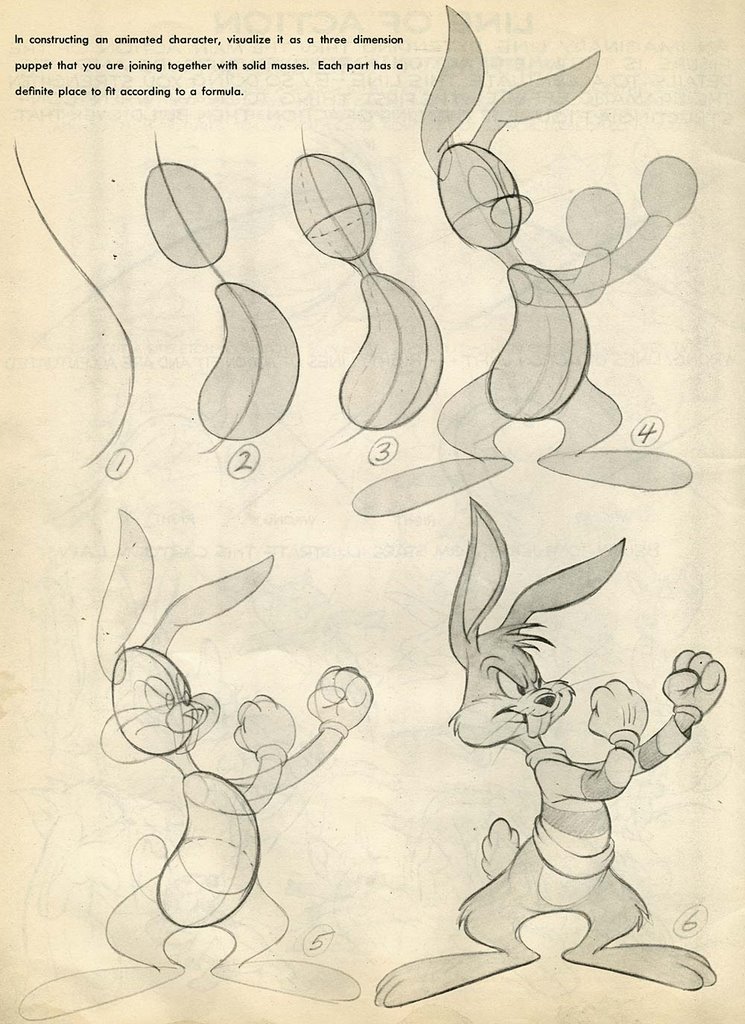
We will learn classic cartoon construction in the same order that classic cartoonists learned it, starting with rubber hose construction and working our way towards sphere and pear construction.
http://johnkstuff.blogspot.com/2007/02/rise-and-fall-of-construction-in.html

Toy Construction: Drawing cartoon shapes in actual 3 dimensions

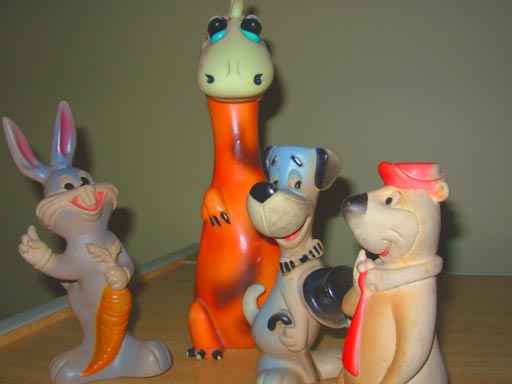
Cartoon toys are cartoon shapes (non-anatomical) modeled into actual 3 dimensional objects. How better to learn how cartoony shapes look in different positions than to turn toys in different positions and draw them?http://johnkstuff.blogspot.com/2007/09/top-cat-turnaround-toy-construction_19.html

Classic cartoon construction is strictly theoretical. Drawing toys puts the theories to the test and will make you draw more dimensional than you ever thought possible.

Line Of Action
http://johnkstuff.blogspot.com/2006/05/animation-school-lesson-5-line-of.html

Silhouettes
These drawing tools are used for the purpose of clarity. They give the artist control of how the audience perceives their poses.

Drawing Funny

Near the end of the year, once the students have a good grasp of basic cartoon drawing tools, then we will apply them to the task of making people laugh by visuals alone.

I'll have to think about how to actually teach this. It may be more of a case of encouraging it and inspiring people by showing tons of examples from the funniest cartoonists in history.


2) Inbetweening and Cleanup

Historically, the most successful method for learning anything has been the apprenticeship system. In the early days of animation, cartoonists broke into the business by assisting more experienced animators. They cleaned up the animators' rough poses and drew the inbetweens. Being an assistant animator teaches you many important principles of animation. You just absorb what the animator is doing and then when you begin to animate yourself, you have a great head start. I think the first year students should inbetween and cleanup the 3rd and 4th year students' animation.

Cleanup itself is extremely important to good animation. Animation is about more than smooth motion. It is about clear distinct drawings, expressions and poses. Smooth motion of vague or sloppy drawings cannot compete with smooth motion of strong distinct entertaining drawings.

3) 1st Principles of Cartoon Motion

We would learn the basic tools of cartoon motion, step by step starting with rubber hose animation.

rubber hose animation basics

animating to beats,http://johnkstuff.blogspot.com/2007/08/animation-course-1-lesson-1-beat-kali.html

how to read and write ex sheets.
-walks, double bounce walks, runs, basic movement,
figure 8 motions,
Overlapping Action
basic lip synch,
¾ walks with animating backgrounds
Animating the impossible-using the medium to do what only animation can do.


4) Life Drawing

Studying the general from life

with an emphasis on slow careful drawings, structure, perspective and proportions.

In the first year, we would concentrate on:

Proportions
perspective
foreshortening


Not much detailed anatomy until 2nd year.

Life drawing has not brought many tangible benefits to young animators' cartoon skills. I have seen many student portfolios that have decent life drawings, yet primitive cartoon drawings. Life drawing should be geared to help the student apply general skills from observing life to his cartoon drawings. That would be the aim of this life drawing class. No quick gesture drawings. Scribbling is not a useful animators' tool.

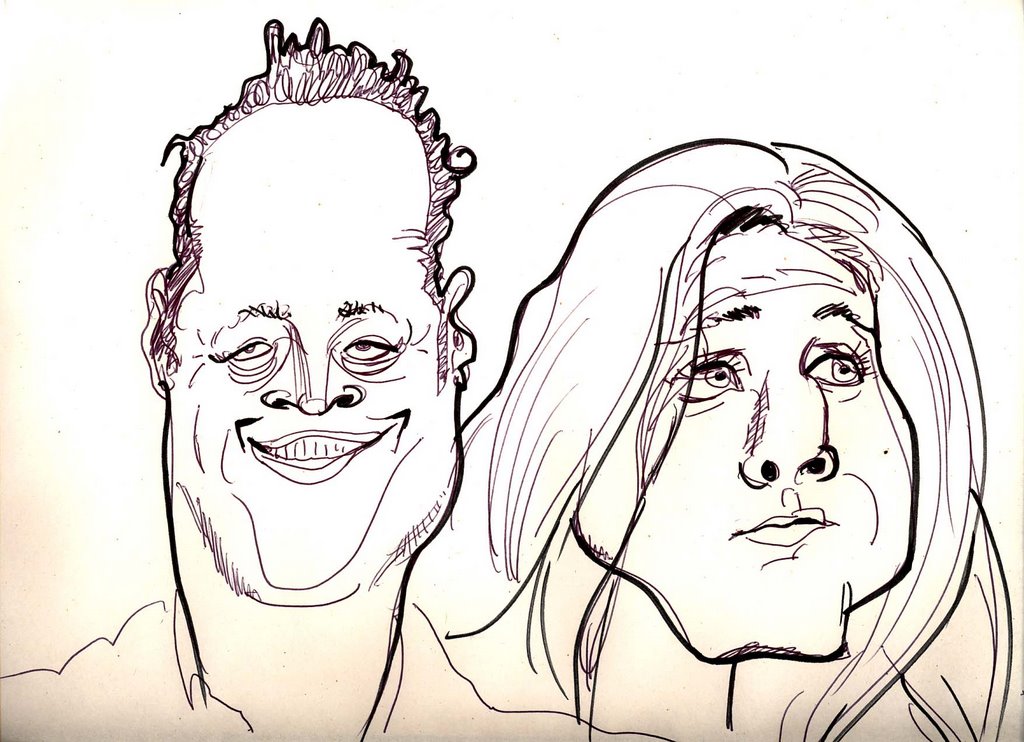
5) Caricature and Observation

Observation over style: Learning to use your eyes and senses to analyze, rather than copying trendy or established styles.

When you sit down to caricature a person, you should try to bury all your preconceived notions of what "caricature style" is.

There is no caricature style. Each person is unique. Every person is a unique style and the person should dictate what you draw.

You should not filter the subject through what you think your style or your favorite caricaturist's style is.

The purpose of caricaturing in this course will be to break your prejudices.
You will be amassing many many new shapes and forms that you can later apply to your animation characters.
You will learn how to see contrasts and how to exaggerate them, thus drawing attention to what makes people and shapes have a distinct clear visual overall statement.

This will help kill any tendencies to genericism that the rest of the business instills in young artists.


6) Applications

This class will be totally devoted to making sure that the students apply what they learn from their other classes to actual cartoon drawings and animation. This is a big hole in most animation schools. We will plug up the hole here.

If you learned foreshortening in life drawing yesterday, you will then do a bunch of drawings of Donald Duck using foreshortening.

If you learned new eye shapes or head shapes in caricature class, you will draw simpler more cartoony characters that use those shapes.

7) ROOTS - History of cartoons

cartoons, comics and animation from 1920 or so till about 1965. (this would be every year and each year I would have the students study aspects of classic cartoons that relate to their exercises.

This course is meant to broaden the cartoonists' horizons and to inspire them.
Disney will merely be one of very many styles we will look at.

Electives

If I had my choice in electives, I would design courses that would broaden the interests of cartoonists but at the same time enhance their creativity and ideas.

Music,

Dance (every year)

Technical Crap Basic Flash

Great Entertainers from other fields

Gene Krupa
Jack Benny

Fred Astaire
Kirk Douglas
Joan Crawford
Peter Lorre
The Three Stooges
Buster Keaton
Elvis
Frank Sinatra
Ella Fitzgerald
Cab Calloway

many many more...


I'm curious as to how many people would take a course like this. If you are thinking of going to an animation/cartooning school in the next couple years, read this outline of my year one and tell me in the comments whether you would sign up for something like this. (I will add the other years in posts soon)

If I get enough interest, maybe I can take it to an art school.

I know one thing. If I started a school for cartoons and animation, the graduates would be in great demand throughout the industry.

Many cartoonists who have gone through the rigorous Spumco training have gone on to great success and fame.

This course would be even more focused on the students because there would be no show deadlines complicating the matter.

I bet if I get a hundred or 2 comments from wanna-be students, we'd have a good argument to sell this school to someone.


http://johnkstuff.blogspot.com/2007/09/year-2-cartoon-college.html

http://johnkstuff.blogspot.com/2007/11/cartoon-college-year-3.html

Wednesday, May 31, 2006

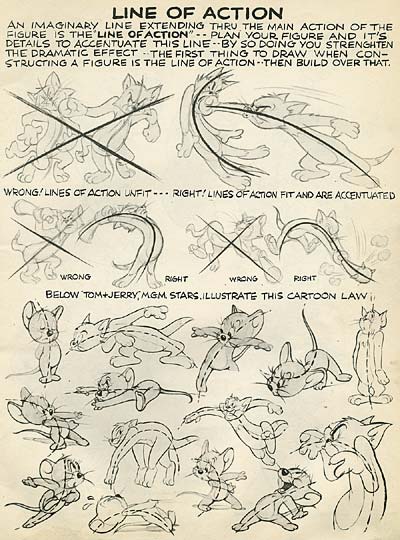
Animation School Lesson 5 - Line Of Action, Silhouettes

http://www.animationarchive.org/2006/05/meta-100000-animation-drawing-course_31.html
Click the link to get a nice big hi rez version of the page above.

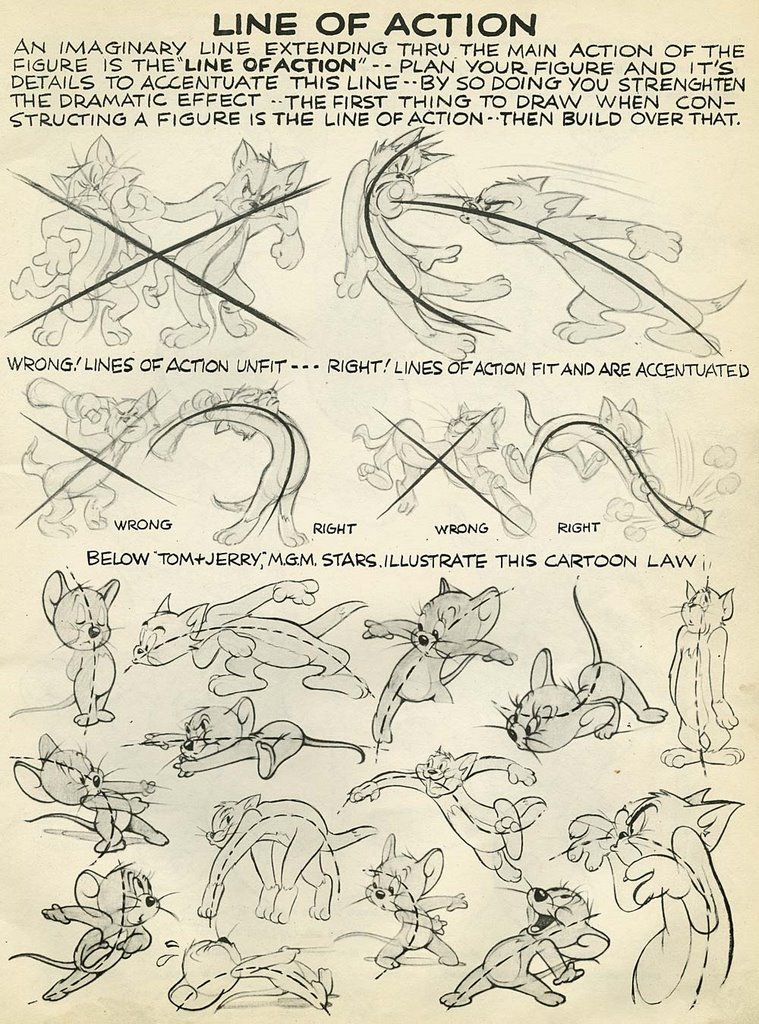
Hi students. You've been doing great on the construction lessons, so now it's time to learn another important principle: Line of Action.

This principle is different than construction in that it is not based on tangible reality.
Everything in real life has construction.
Line of action is an artistic concept that sometimes by accident happens in real life but not always.

BUT! It is an important tool for artists.

Line of action helps your poses "read". It makes them clear and understandable and gives them a distinct non-ambiguous direction.


Here are some examples of strong line-of-action in the poses from classic cartoons.
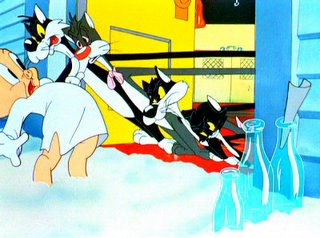
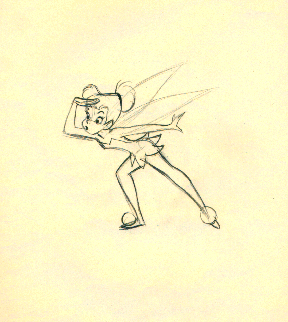
Lines of action can be obvious and exaggerated as in this pose above from Kitty Kornered and the one below of Tinkerbell.

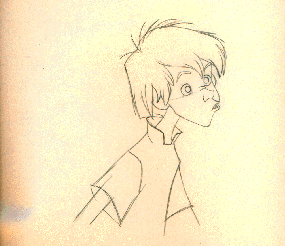
Note how the details follow the line of action and don't go in opposite directions.Here above is a more subtle line of action in the body pose of Wart, the character from Sword In The Stone. Look how the artist combines solid construction with a flowing line of action to create a solid and clear easy to read attitude.
When drawing your line of action-use another principle to help the line of action read even more clearly.

SILHOUETTE: See how the frame above combines construction, line of action and clear silhouettes to make an easy to read composition-even without having any details in the drawings.

How do you get a clear silhouette?
By using NEGATIVE SHAPES.
See the empty spaces between the arms and legs and major forms in the drawings above? Those are negative shapes. They are as important to your drawing as the positive shapes. They help make the silhouette read.


All the drawings above-the Preston Blair page, the Clampett frames and the Disney drawings are using the same basic principles. They superficially look different in style but to the trained eye, only slightly different.

The Clampett drawings are looser and more flowing and rounder, while the Disney drawings are more angular-but they all use the eaxct same fundamental principles.

Today, sadly these fundamentals have mostly disappeared.

Most cartoon characters now are rigid, they stand straight up and down, have no clear silhouettes, no construction, no line of action and no design at all. Characters now look like pieces of broken glass that don't fit together and certainly don't flow around the forms and line of action of the characters.
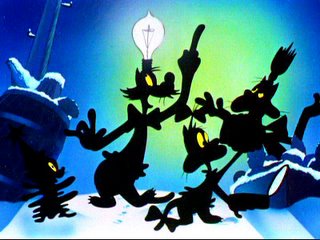


But you can do better.

Copy all the Preston Blair poses-using the same methods you did the construction drawings and then check them in photoshop against the originals to see where you are off.

Then when you are getting close to getting those accurate, try copying the Clampett and Disney drawings.

Saturday, September 22, 2007

Toy Drawing 1: Top Cat Turnaround Toy Construction Exercise


Toys are Better Than Life Drawing for Cartoon Construction Studies
Life drawing in theory can be useful to an animator. It can teach you perspective and construction, foreshortening and the like, but in reality, it's very hard to look at very complicated structures of human beings and break them down into fundamentals you can use for cartoon shapes.

You get too easily distracted and confused by the tons of details on real live creatures. You can't see the underlying forms easily.

Most cartoons don't show any important influence from life drawing anyway. Even the ones that are supposed to be "realistic". They suffer from the confusion between detail and form. Form is more important than detail.

I'd put some examples up, but some folks will freak out.

The details need to follow the physics of the forms, and the more detailed your cartoon design is, the harder it is to control - especially if the underlying form is faulty to begin with. Drawing well sculptured toys makes the fundamentals of construction and perspective much easier to grasp, and just as importantly to then be able to instantly apply them to your cartoon drawings.

When you turn a toy around, you can see how the features change shape as they bend around the curved surfaces.If the head tilts up, then the features that stick out (noses) start to obscure the features above. You see more of the underside of the form than the top. This may sound obvious, but try to draw it!


Construction is not something that comes natural to me. I naturally draw "by design", that is to just put shapes that balance well together in 2 dimensions. That's a fault, because it doesn't mean the characters will turn well when animated.

Some folks have a natural eye (or brain) for construction - like Jim Smith, who just somehow sees the structure of something instantly. I see the details first and have to force myself to think about forms. (Squinting your eyes helps blur details and allows you to see the underlying structures better)

When I draw toys, it helps me to get more used to the logic of structures in space. If I did it a lot, it would start to become second nature and I wouldn't have to think about it so much.

Today, when almost everybody draws ridiculously flat, real animation can't even exist. We have to rely on silly tricks to zip characters from one abstract flat pose to the next. This severely limits what we can achieve creatively.


WHEN YOU COPY, DRAW SLOW, CAREFUL AND THINKNote on the 3/4 poses, the feet have no perspective...(except for that pink stumpy thing on the right)


When you copy something, there is a purpose to it: to learn something. If you draw too fast, you will not learn anything.

You want to carefully study your model.

When I am learning something, I tend to draw stiff, because I am thinking about what I am trying to learn. The drawings don't come out all pretty with clean flowing lines and stuff.

When you study, you are trying to be accurate, as opposed to beautiful and flowing.

Once you have done your stiff drawings, you can loosen up a bit and then try again from memory and see if what you learned sunk in.

I did this quick sketch at a pizza joint a couple days after my Top Cat study. It's a little wonky, but some of what I sketched slowly 2 days earlier sunk in.


If you also start to study and you draw slowly and carefully, and critique your own studies honestly, then you will absorb much information that later you can apply to your own work.

If you want to learn construction well, this is a very good exercise. Draw toys. You can draw the same angles that I did above and compare them to mine, then try these new angles below.

If you want me to critique them, put links in the comments to your drawings.You can also take your drawings into Photoshop along with the photos and lay them on top of each other at a % to check how accurate your copies are.

See, Kali is doing it:
http://kalikazoo.blogspot.com/2007/09/muskie-soaky.html