
Tuesday, October 31, 2006

Color Theory - neutral or natural colors


Many cartoon artists think there are only 7 colors:
RED BLUE YELLOW primaries
GREEN ORANGE PURPLE secondaries
PINK stinkies

And if you only looked at modern cartoons and video box covers it would be understandable why.
BUT!
There is a whole huge family of colors that I encourage my painters to add to their palettes.
The neutral or natural colors. There are an infinite variety of these. They are made up of differing amounts of greys, browns and tiny amounts of the primary and secondary colors.

These kinds of colors are hard to name. Maybe that's why they are seldom used. Good artists can paint them, but there are no words to describe them, so execs can't say yes to something that doesn't have a simple word.


Now, for those of you who think only pink and purple are pretty colors, do you think these are ugly colors?
These colors are all covered by the one inadequate description: "Flesh Color". There are a zillion "flesh colors" and most people I know really like them.
Would your naked friends be prettier if they were these colors?:
Natural colors are rich and deep. They make things feel more real-even when used in an abstract way. I think this is what the "serious" cartoons are trying to acheive when they use "pee and poo" colors, but as you can see, natural colors don't have to look dingy and dirty. They can be quite beautiful.

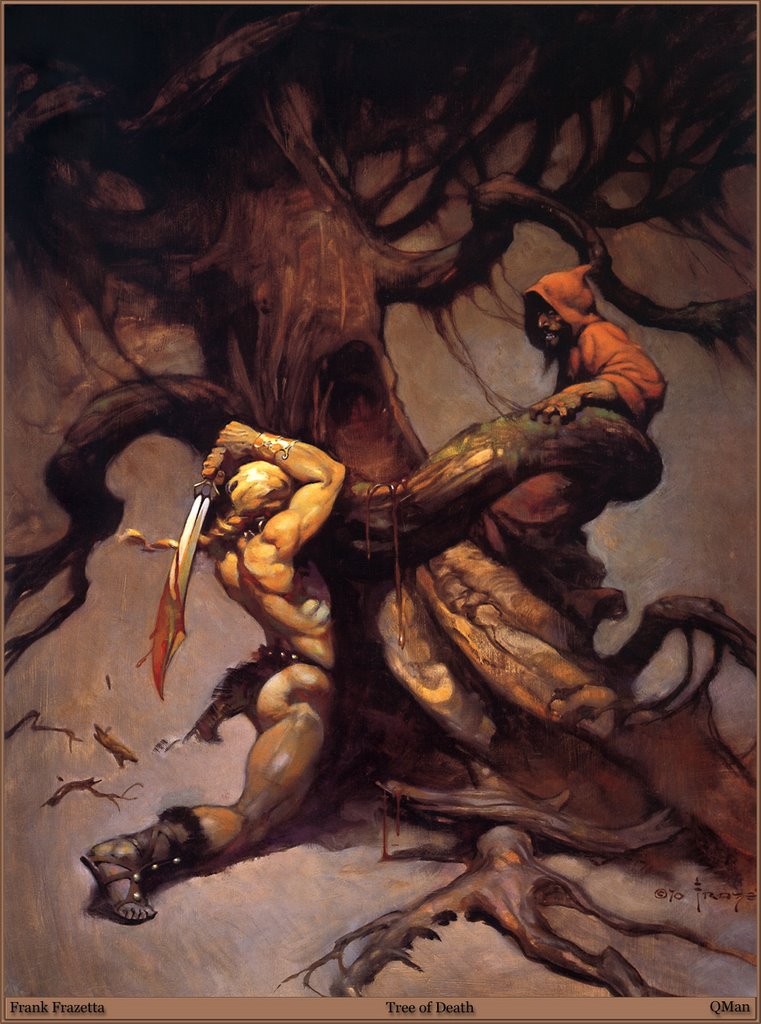
Here, Frank Frazetta's main color is a tan-but if you look close you will see it is made up of many shades and hues.
Here is a similar color scheme only simplified, from Slumber Party Smarty-a Yogi Bear cartoon, I think painted by Monteleagre in 1958. The browns on the wall are made up of different tints of brown-some yellowish brown, some reddish brown, some purplish brown.

The bright red door really pops from the BG without breaking up the image. If the red was next to another equally bright primary or secondary, it would clash and be garish and would break up the image.

This is a very unusual and striking limited palette of black/grey and light peach with a bit of yellow. Who would think of a color scheme like that? Nature would. Steal it!

Here's a very limited palette of warm greys from FLCLY
In this Art Lozzi BG, the yellowish tan color is painted on the entire canvas and then the brown of the tree and fence, and the green grass are painted on top- in different degrees of opacity. This instantly brings all the colors into a harmonious family-and it is striking because it is an unexpected color scheme that you don't expect to see in cartoons.
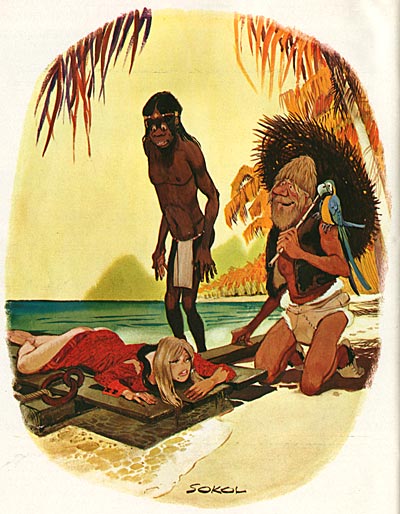

Sokol manages to use shades of subdued yellow and greyed browns to make a warm soft scene, without making it look depressing.

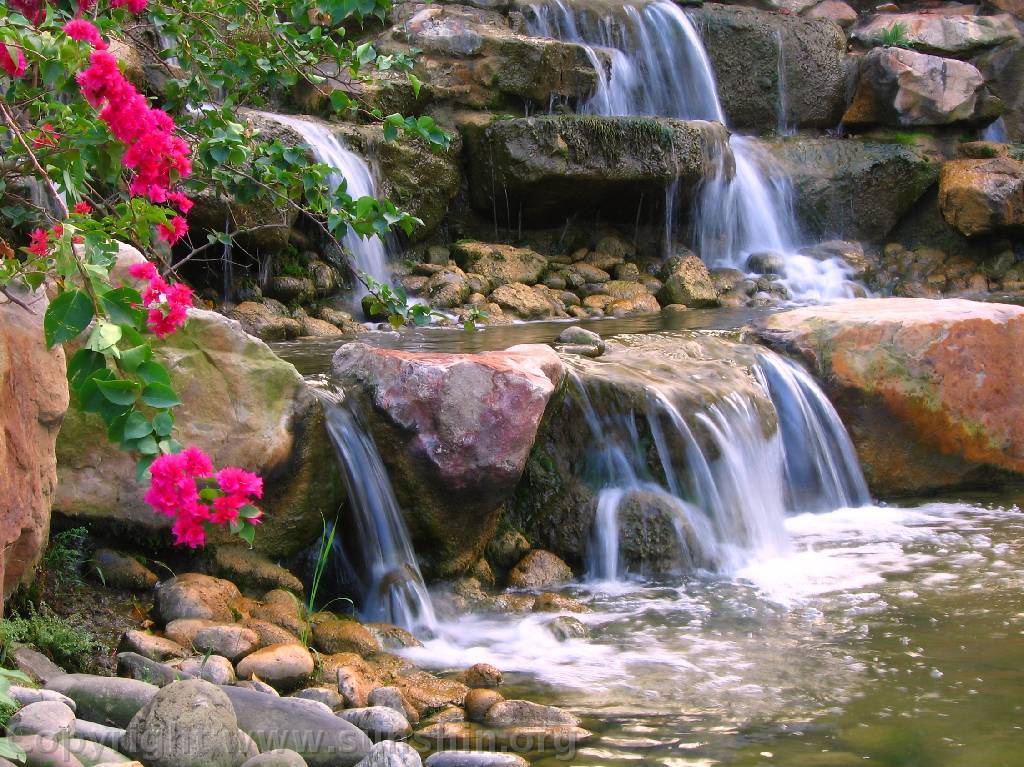
If you use natural colors as your main scheme, you can then paint small details in brighter colors as in this scene of rocks and flowers.
Look at all the interesting tints within the rocks-they aren't simply grey.
The whole little waterfall scene is framed by the green foliage.


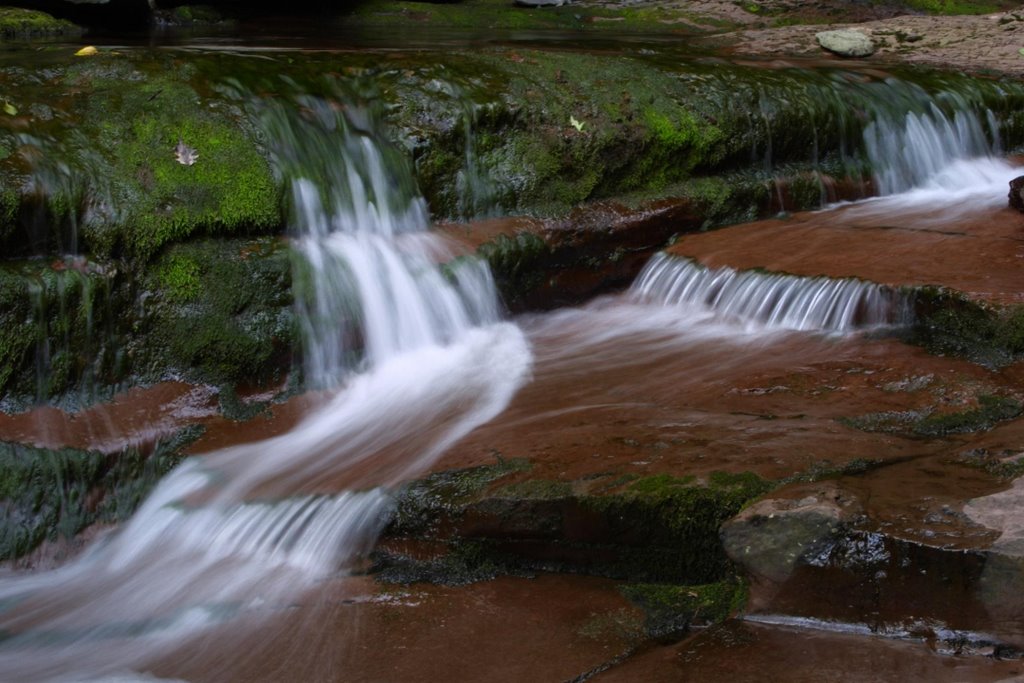
Here is a similar color scheme-dark, greyed yet rich and full of life and beauty. Look at the two main tints in the rocks-the faces are deep reddish brown, the tops are warm grey.
Notice that the water isn't blue. Even the rainbow is not your typical My Little Pony rainbow. Here's what Frazetta can do with the same basic color scheme. Again, look close-nothing is made up of a single color, yet everything looks more like the substances they represent than the actual substances themselves.


Grey and very light greyed-pink.


Dirt can be beautiful-it doesn't have to look dirty or muddy.
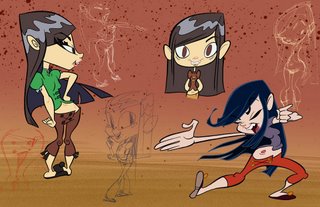
Neutrals with spots of bright colors.
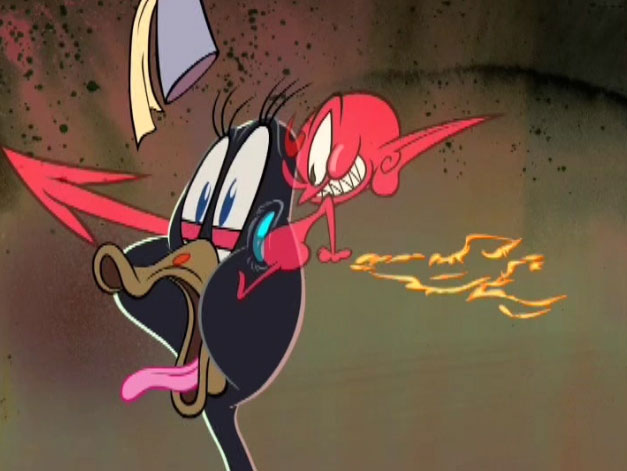
Here is a basic natural color scheme with spots of bright color. The bright colors really stand out against the neutrals.
Here's Mary Blair using that theory.

Her layouts and paintings are so well organized.
Many artists look at her stuff and glean that the secret to her style is to draw flat shapes, and then they proceed to draw an unorganized assembly of unrelated broken up flat shapes and then paint them pink, purple and green.

She uses an extremely thought-out hierarchy of shapes within shapes and levels of color shades and contrasts.

Everything ends up looking unique and readable and pretty-and cartoony.Art Lozzi is using a simple color palette that is also well organized. The color and value contrasts of the cabin, snow and sky are less then the contrast of the inside of the cabin.
That makes the inside stand out more and grab your attention.

If this scene was painted today, it would be unreadable.

Something like this:


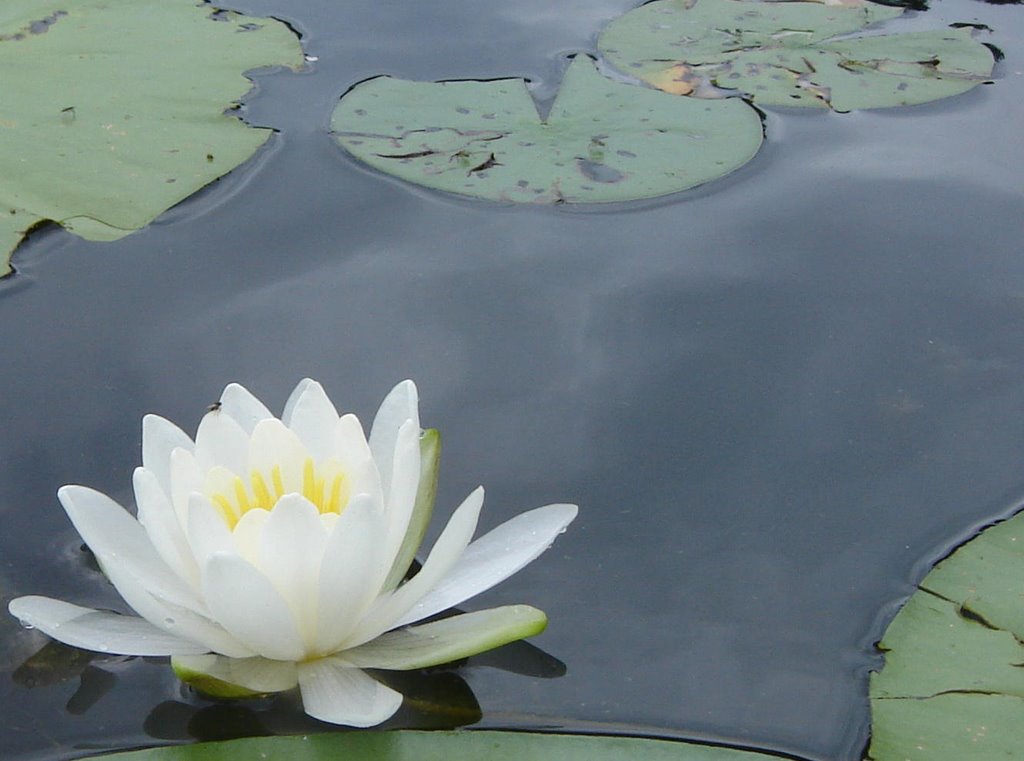
There are an infinite amount of greys. You put any color against grey and it will pop-like this flower.
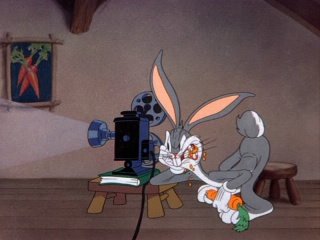
Tortoise Wins By a Hair is painted by Johnny Johnston, who tends to use rich dark, subdued color schemes. Within his deep tones are many subtle color and value blends which makes the paintings and scenes really rich. Bugs' cool grey really reads against the warm greys on the wall and floor. Johnny painted his BGs in oil-a very rare and inconvenient medium for cartoons.

He also painted The Hep Cat (which has been totally ruined on the Looney Tunes DVD set-they actually removed color for once and most of the cartoon looks black and white now. It looks way better on the Laser Disks and VHS tapes).
He later worked for Tex Avery at MGM and painted such wonderful cartoons as King Size Canary. Take a look at how rich the colors are-especially in the back yard with the alley cats.
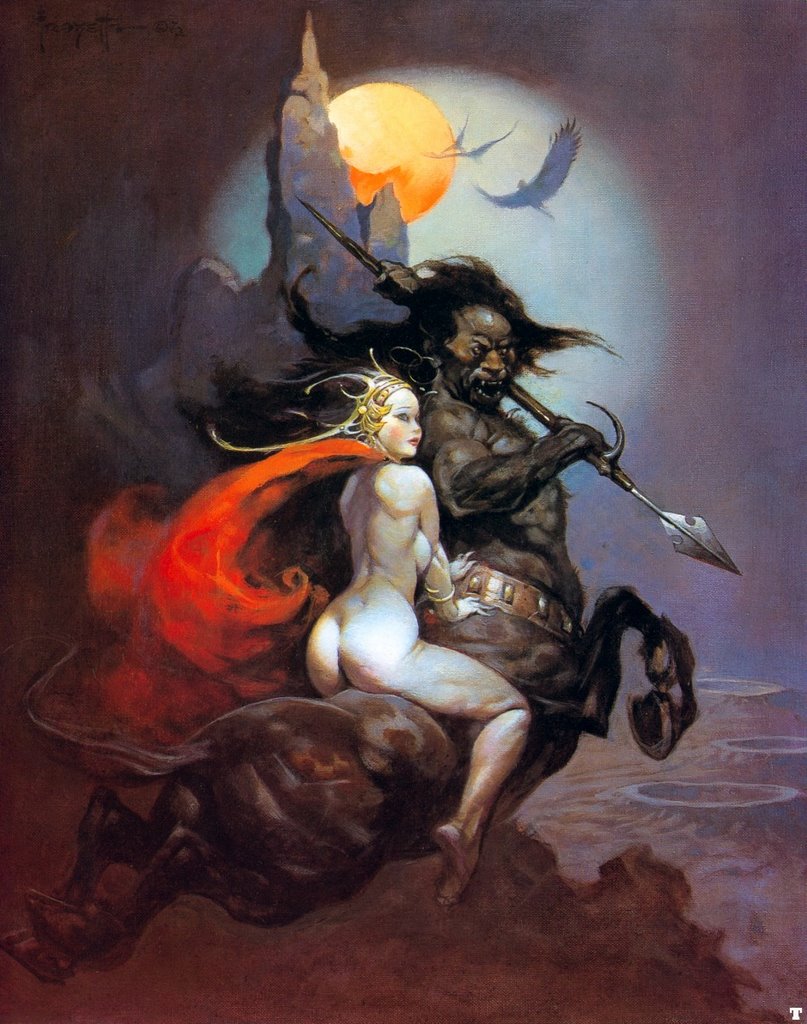


See the hierarchy of colors? The BG is mostly grey tones - blueish purple grey sky and craters, then brownish grey rocks. The centaur is darker grey and blends from warm brownish greys to cooler greys up towards the man chest and head.

Even the girl's flesh is greyed, yet it is so much lighter that she pops out and appears more delicate.
Her red cape really pops.


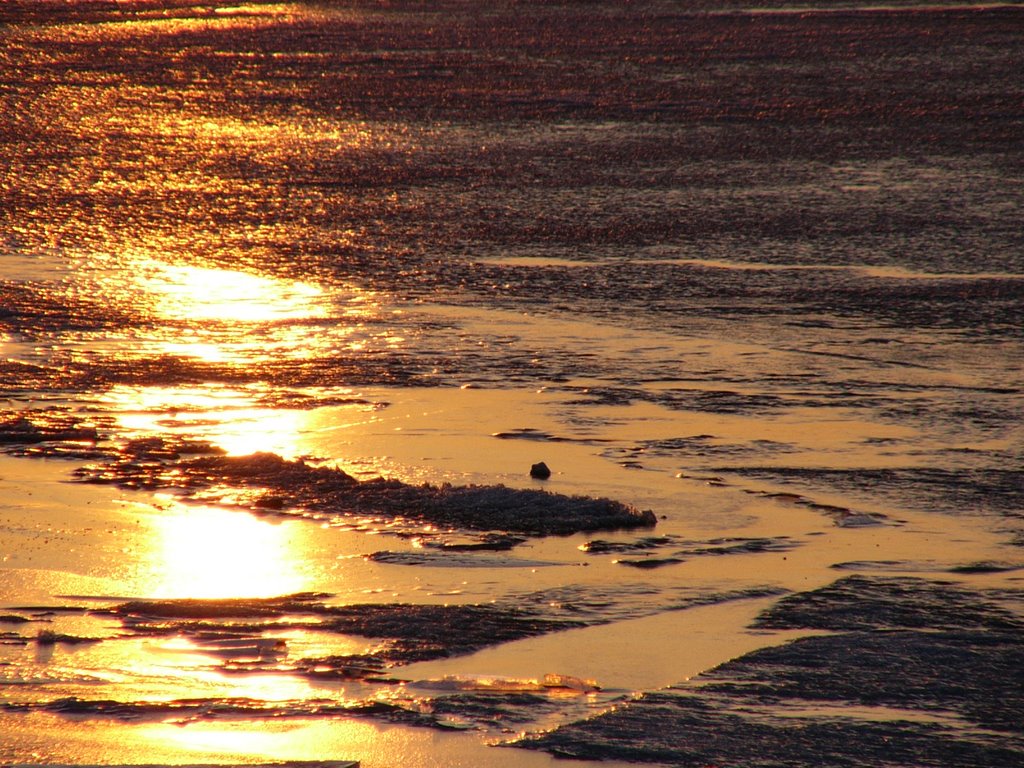


This kind of coloring takes a lot of skill and a keen eye and TASTE. Even if you know all the theories behind it, it doesn't mean everyone can combine subtle colors and make them beautiful. It takes a rare and special painter. Many painters try it and end up with mud.

It's too bad taste can't be learned. However if you are gifted with a tasteful eye, and you learn the theories and the ways great colorists combine and mix their colors maybe you can be another Mary Blair, Frazetta, Sokol, Wray or Dedini.


Here's a link to some great neutral background paintings from Woody Woodpecker cartoons:

WOODY NEUTRALS

Monday, October 30, 2006

Classico is here! Tenacious D video starring Jack Black and Kyle Gass

Hey Everybody! Today is the official premiere of Classico. I drew it, Nick Cross did BG design and color styling and Copernicus did the Flash animation.
Marc Deckter, Jay Li and Marlo Meekins also were invaluable as were Pringle and Kristen McCormick. And Kali Fontecchio too!


If you are OVER 18, click this below!

See it at Tenacious D's site:
http://tenaciousd.com/classico/


FUNNY ANIMALS, ZOMBIE CROWDS

MORE ANIMAL CROWDS

FUNNY ANIMALS ARE FUN TO DRAW

LOWER FUNNY ANIMALS

ASSORTED WEEKEND CARTOONY TYPE PICTURES

Pencil Test seq5,6,7 (Kristen McCormick):


Pencil Test seq8 (Kristen McCormick):


Pencil Test seq9 (Pringle)


If you want more crazy cartoons, buy this action below!


http://www.myspace.com/jkricfalusi

Sunday, October 29, 2006

Specific Acting-Scribner, Clampett, Blanc, Foster


It took 4 wonderful talents to do this great scene.

Warren Foster wrote the rhythmic dialogue. (Very important to voice actors. Bad stilted cartoon writing , written in "writer-speak" is very hard for an actor to read naturally. This might be partly why so much voice acting is so dry and monotone now. You can't read the awkward dialogue any other way.)

Clampett directed the cartoon and gave it context and emotion.

Mel Blanc read the dialogue with verve and rhythm and a huge variety of contrasts and accents. (no one does this any more)

Rod Scribner animated it perfectly and in context to Mel's voice and created expressions and poses that gave even more meaning to the dialogue and delivery.


Drawing specific acting is my favorite thing to do and more than anything else is why Ren and Stimpy was so successful. They had rhythmic dialogue and tons of unique expressions which made them seem real no matter what crazy situations I would plop them into. Of all the innovations that came from that show this is the biggest one and the one that wasn't carried on by anyone else. People would copy certain specific Stimpy expressions and use them out of context in their own cartoons, but I've yet to see anyone make their characters have an inner life which can only be achieved by doing what I've been talking about here.

You have to be willing to turn over your model sheets too. And do layouts in the country.


"I can hardly wait to see..."


(crazy laugh)


"I love that man!"


"He drew a knife on him..."


"AUGH!"


"..whew..."


"They're at it again!"


"...I hate to look..."


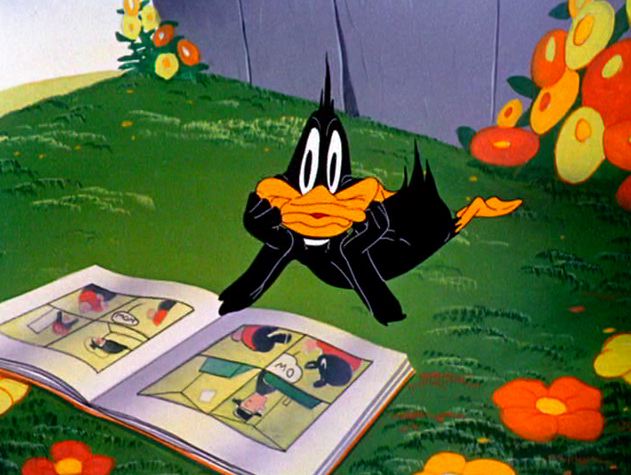
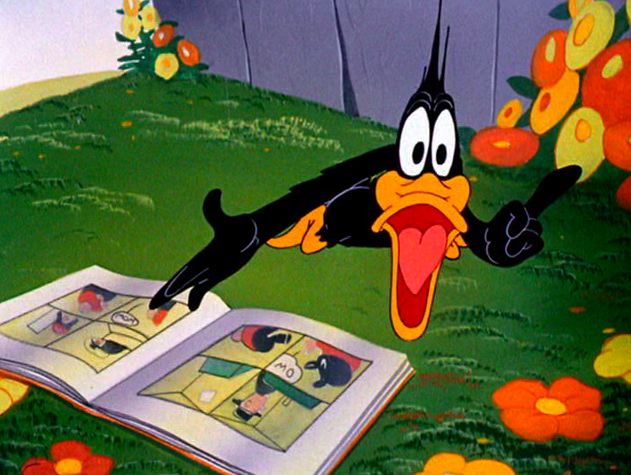
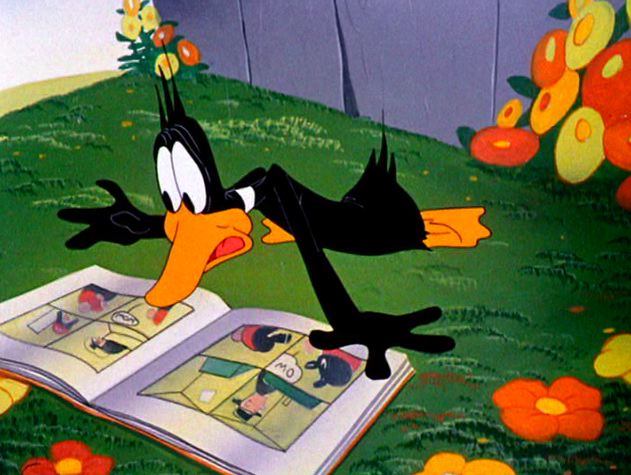
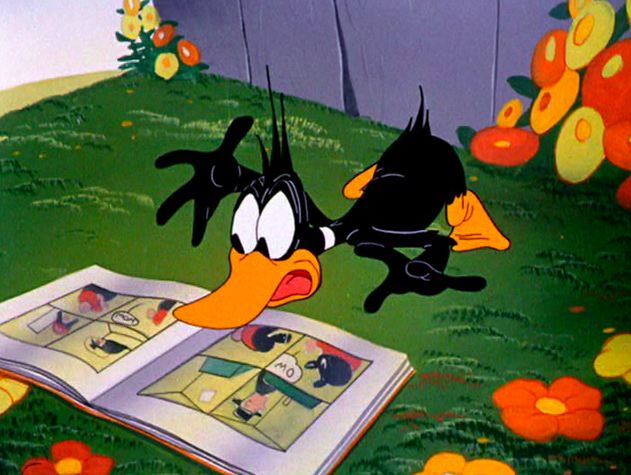
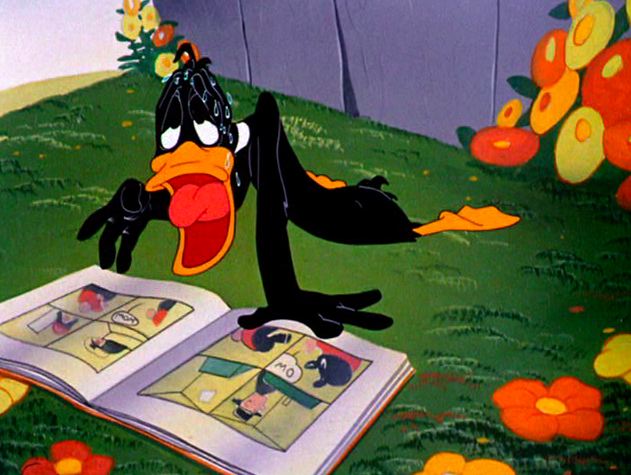
This is so Clampett. He himself was a big cartoon and comics fan so the whole gag itself is based on how he feels about getting the latest edition of one of his favorite comics.

Everything Clampett did, even his dirty jokes are presented from the point of view of a kid. It's a kid's eye view of the world.

I really identify with this scene because when I was kid I couldn't wait for Tuesdays and Thursdays, the 2 days when all the new comic books would arrive at the local drugstore.

I would walk the mile and a half to Paul's Sundries and pace until they would place the new issues in the racks and then I'd spend an hour or two molesting all the comics, deciding and stressing over which 4 or 5 issues I could spread my allowance out to grab.

Ditko's Spiderman and Kirby's Fantastic 4 were always on top of the list, then I'd have to take turns on Deadman, The Hulk, The Avengers, Hot Stuff, World's Finest and a zillion others.

I always snapped up Betty and Veronica's Giant Size Summer fun issues to gawk at the sexy drawings Harry Lucey did of the girls frolicking on the beach in their skimpy suits.


Wanna freeze frame through this amazing cartoon yourself?

Well you can! Watch Clampett's "The Great Piggy Bank Robbery" and MORE on the 'LOONEY TUNES GOLDEN COLLECTION VOLUME 2'...

...BUY IT FROM AMAZON WITH THE LINK BELOW!


Friday, October 27, 2006

Color Theory - steal from anime if you can't think of anything yourself


Like Eddie says, this is a cultural crisis! The Japanese are beating the crap out of us at our own game!
http://uncleeddiestheorycorner.blogspot.com/2006/10/thoughts-about-anime.html

Look what a wonderful variety of color styles the Japanese cartoonists come up with just as a matter of course!

Color seems to be the thing that anime does best.

It's a tad bit on the cold side for me, but then the Japanese are a cold race.
We westerners on the other hand are naturally emotional and warm and inventive, yet our stupid-ass corporate franchise controlled society is stopping us from what we could easily do-beat the crap out of cold cultures that are still imitating what we did from the 1930s to the 1950s!

This stuff makes me crazy!

So much fun and eye candy. Every mood imaginable.
If you are a painter and are stuck for color ideas, just steal a pile of these!
After copying these color schemes, you might be able to see the general concepts behind them and start to create your own schemes.


But there is no excuse for bad color in America anymore. The internet is a vast library of ideas.

All I did was type "anime" then "FlCl" in "the Google" and a wealth of genius color ideas came up.

You can do it too! Look up anime, fashion magazines, nature photography-anything but modern American cartoons to break your habit of only using 3 approved cartoon color schemes.

With all the easily accessible inspiration available today, why the Hell is there still shit like this?
AAAAAAARGH!!!!!
Thank God our pals the Japs are keeping visual pleasure alive. Let's pay attention!

This last one isn't too impressive color wise but it just goes to show you how Japanese artists know what the public wants and are not stingy at giving it to us whereas stupid evil conservative modern Americans refuse to give humans natural things that humans like.

http://mag.awn.com/index.php?ltype=search&sval=RD01&article_no=2738

Color Theory - eye relief

Here is a bit of stuff to wash away the dirty pictures I violated you with yesterday.This is a great establishing shot from Yogi's Big Break painted by Montealegre and drawn by Dick Bickenbach.
The strongest contrast in the picture is the cliff and tree in the foreground.
It has more saturated color than the BG and stronger contrasts in coloring and texture of the 3 objects that make it up.

1) Dark grey-green tree
2)Green (slightly bluish) grass
3) red brown cliff with dark purple-brown sponge texture

Look at all the textures on these things. They are different tints than the color underneath-unlike all the crappy BGs in the last couple posts that just use darker and lighter shades of the same purples and pinks.

Using different tints and values to texture your surfaces adds depth and makes even stylized cartoony or artistic paintings seem more real and inviting and natural.

REMEMBER THIS IMPORTANT CONCEPT! -IT'S IN ALL THE GOOD PAINTINGS ON THIS PAGE. And in nature.

The background in the painting-the ground, hills and sky are allvery similar in value-lighter and greyer which makes it seem farther away and attracts our eye to the foreground.

The whole beautiful scene invites us into the cartoon. It pleasures our eyes and tells us fun is on its way.

That is good logical thinking. Tell your audience you like them by giving them sensory pleasure right away!


Samurai Jack was full of brilliant color schemes. Look how moody this poster is. All the colors are related, yet the picture is not monochromatic-because of the theory I mentioned above.

Also there is a hierarchy of contrasts in the picture.

Jack is lighter than the BG which makes him read against it.

But he also blends with the scene by having the reds mixed in with his colors.

At the top of the pan, the abstracted shapes are silhouetted against a bright orange spot circled by a wash of brownish tan.


Glenn Barr has a book out now filled with brilliant color paintings that are full of thought. If you are seriously interested in learning about how to control color get this book and study it! Copy the color schemes and try to figure out the general concepts behind them! I wish Glenn would do a blog and explain his technique and thoughts. It would benefit mankind.

Jamie Hewlett's Gorrilaz- the best cartoons today in my opinion.
The foreground characters are cooler colors against the hot reds behind them. The characters instantly read even though their colors are muted.
How much more interesting is this than seeing the same old pink and purple color schemes in so many cartoons? (Actually there are some in Gorillaz, but the drawings are so great I forgive them!)

I also really like odd skin colors.

I hate the concept of "flesh color". There is no such thing! Flesh comes in an infinite variety of colors and tones. Throw out your "flesh colored" paints and mix up interesting colors that suggest flesh but aren't really.


Here is some greyed bluish flesh.


Greenish flesh

Look how different each of these color schemes are-all from the same cartoon!


I wish I could find more of the good stuff from Powerpuff Girls. The show is loaded with clever and effective well thought out color. When I googled for pics I mostly found purple and pink scenes! But I don't remember the show having mostly that.

WHAT THE HELL IS GOING ON?
Why can't we have more stuff like this?

Now, if I were a BG painter or color stylist and I had to go into work everyday and paint the exact same 2 or 3 color schemes that I have painted for the last 10 years I'd be suicidal.

I just don't get it.

Color can be so fun. Our eyes crave it. Artists are supposed to CREATE. Why do so few do that? What a great job it would be to invent new color schemes every day and new brush textures and techniques.

If you are some bored painter who likes inventive and succulent colors and nobody lets you do them you better post some links to your stuff in the comments because I will give you something to do that the whole world will see.

Thursday, October 26, 2006

Will It Ever End?


Color Theory - does cost equal quality?

One of these " 'toons" costs 50 dollars to make, the other hundreds of millions.

http://www.crayolastore.com/index.asp
Here's everything you need to color style a cartoon, no matter what the budget!

Wednesday, October 25, 2006

Color Theory- good color without a lot of money - Art Lozzi HB

Some of my painting heroes:
Frank Frazetta
Mary Blair
JP Miller
Mel Crawford
Bill Wray
Johnny Johnston
Monteleagre
and...

ART LOZZI!

You don't have to have a lot of money in your production budget to still have tasteful and appealing, interesting, non-generic art.
Here are some BGs from extremely low budget $3,000 HB cartoons from 1958. I find them infinitely more appealing than the purple and pink BGs that appear in movies that cost $200,000,000 and more to make. In Daffy Daddy and Robin Hood Yogi, Art Lozzi chose very atypical colors to paint the forest. Many cartoons paint trees and grass a simple middle green-straight out of the tube or they use 50-50 yellow green and paint all the trees middle brown.

LEVELS OF IMPORTANCE: The painter decides what is important in the scene and uses color and value and texture and contrast to draw your eye to a hierarchy of elements.
The picnic basket is most important, so it has a lighter color than the BG and it is a contrast in hue. The BG is mostly greenish so the basket is orange-tan.
The table is less obvious than the basket but is still contrasted against the forest by being a lighter and more yellowish shade of green.

The values of the trees against the green BG are very close in value to the BG, so that the image doesn't become too contrasty or busy to compete with the foreground elements.
This is very logical or functional.
The choice of colors is then aesthetic on top of their functionality.
They work and they are pretty.
The tree in the foreground has the strongest contrast and thus it stands out and frames Yogi. The analogous colors (colors that are similar in tint) in the green BG give the BG depth. If it was all one tint of green with just darker and lighter areas (as in all the bad examples I showed you in previous posts) the BG would seem flat and artificial.


This peachy sky is surprising and a nice color and adds cartoony happy interest to the scenes.

EVEN STYLIZED IMAGES SHOULD BE ORGANIC: Even though the trees are ALMOST straight lines, they aren't all perfectly parallel. They are just organically different enough to make the stylized BG feel natural.
The trees also are not evenly spaced. There are different sizes and shapes of negative spaces between them.
Note how the flowers are little spots of bright happy colors to liven up the image.

This man is not brilliantly color keyed but at least he is not garish. His colors are related which helps him read as one object-a man. His colors contrast well against the BG painting and make him read clearly against it.


I had Richard Ziehler-Martin reproduce this pan BG for me and I used it in my Ranger Smith cartoons. I tried out so many BG painters and asked them to learn the early HB techniques and Richard was the only one who pulled it off. He then took the ideas from these cartoons and did more elaborate BGs for Boo Boo Runs Wild.


I like how hills and planes are suggested by just putting a texture with one hard edge and then a faded edge.


The log cabin is not the typical tan wood color you always see in cartoons. It's sort of a warmly greyed tan which is cartoony and still feels natural. It's not screaming at you.

Look how happy and colorful this is!


I don't know what Art's thinking was for these 2 cartoons but maybe he figured that thick forests are actually kind of dark, not bright and typical "cartoon-colors".

Part of what makes something fun and colorful is that it differs from what you are used to seeing in a cartoon.

In later Hanna Barbera cartoons, the colors become much more standardized and generic.

For the first 3 years of Hanna Barbera's TV studio there was a lot of experimentation in design and color and texture and animation. All done cheaply, but much done creatively and full of surprises.

Fun needs surprise. Imagine getting the same birthday present every year? That's how modern cartoon studios treat their product. They give you the same thing over and over again.

Even if you genuinely like the combination of pink-purple and green, do you really ONLY want that combination?

Here's another Yogi Bear cartoon painted by Art that is in a different color style.
A still from Threadbare Bear
Art doesn't like to paint the same exact style every time and even on a super low budget cartoon show with a fast schedule still finds the time and will to make his work fun and pretty and full of surprises.

More about Art to come, including his insights and history of 50s and 60s HB cartoons.

Tuesday, October 24, 2006

What's Wrong With These Pictures?

CONGRATULATIONS!
EVERYONE WHO COMMENTED (ALMOST) GETS AN "A".

THE CORRECT ANSWER TO "WHAT'S WRONG WITH THESE PICTURES?" IS:

EVERYTHING!

It seems like you all have been paying attention. Now how many of you will start applying this hard-won knowledge to your own art? That's what I'm waiting for. Get at those Preston Blair Lessons!


If you've been reading my blogs and lessons for awhile, you should easily be able to tear these babies up. Gimme some comments. I wanna see if you've learned anything.


Here's a start:

Monday, October 23, 2006

Color Theory- look at the sky before you paint a sunset

I wonder why there is only one way to paint a sunset anymore in cartoons:


My suggestion to BG painters is to look at the sky instead of looking at cartoon sunsets. Here is a pile of free ideas from God, the greatest color stylist:


Ideas are everywhere, but as I've said before, animation is such an inbred world that many artists don't take advantage of the richness of inspiration just outside their studios to draw from.

Instead we tend to rely on what has been done over and over again in our tiny little field that seems to get tinier with each generation.

Let's turn our senses back on and reflect a wider world to our audience.

Sunday, October 22, 2006

Color Theory: Pee and Poo colors versus Colorful Greys