
This was my first Clampett experience, and I don't even mean the whole cartoon; I mean just the opening. Right from the opening title cards I felt an uneasiness, like something weird and momentous was about to happen.

It starts out with a pretty normal pan of a farm, but layed out with odd angles that make it move in a slightly creepy way.


Then it just cuts to Daffy walking. I always assumed he was part of the pan, but no, it's a jump cut that I never noticed till now.

This walk is rife with tension, animated by Izzy Ellis. It's a double bounce - which is usually used to make a character seem happy. Something about this walk though is anything but bubbly or happy.

When I saw this for the first time, an anticipation of dread gripped me, like Daffy was expecting the world to come to an end. I never had weird feelings like this watching cartoons before.

And Daffy looked so different than what I was used to. He was more angular, scrawny and his poses were dynamic and really communicated what he was feeling - new more specific feelings. He's waiting for something that must be more important than life itself. What was it?


More great poses!

I was astounded at how clear and stark his poses were. Like a caricature of the cartoon principles of silhouettes, line of action, anticipations etc. No timidity like the poses in a Friz cartoon.

He says "sufferin' succotash!" which I had only heard Sylvester say before. I wonder who said it first. Clampett said that when they recorded Mel Blanc's voice for Daffy, he liked the way it sounded better than after they sped it up, so when he created his first Sylvester cartoon he suggested using the same voice and not speeding it up.

I love this action that really accentuates the dialogue.

Mel and Carl Stalling are in top form in the cartoon. It's amazing how Clampett coordinated all his talents to contribute to the unique intense feelings you only feel in his cartoons.


"Why don't he get here?" Listen to how the voice and music work together perfectly here.


This head shake is great too.


My eyes were bugging out of my head watching these unapologetic poses.

Nice ass anticipation there...

I think this was the first time I noticed smears too and they work perfectly here.

Here's a nice jump cut to the mailbox in a different position. Clampett's camera angles add a lot of dynamic tension to his cartoons.


I think this is a different animator.


Man was I creeped out by these realistic 3 fingered man hands - which Mike Fontanelli told me are outlawed in Japan.

Yikes! It's hilarious but really sick. Like a mutant from Hell has come to violate Daffy's sacred mailbox.

Another bold jump cut
...to reveal Daffy's eyes sliding around the post like living breasts whose aching needs beg to be sated.

All this is just the
beginning of the cartoon and it made me feel like I was seeing - not "seeing" but
feeling something different in a cartoon. I was used to laughing at my favorite Chuck Jones or Tex Avery cartoons and admiring the artwork and animation, but this was my introduction to a kind of comedy that had the extra element of intense feeling and empathy for the character. I was sucked into Daffy's emotions and felt everything he felt, instead of just laughing at him from the outside world. Clampett has this way of sucking you into the screen by making the story come out of the characters' emotions, rather than just stuffing them into a neat and tidy preconceived plot.
The Great Piggy Bank Robbery was a great revelation to me. It completely changed how I thought about cartoons and entertainment.
I've made a bunch of clips from it and will share all my revelations about it. I just had another last week as I was studying it again for the millionth time.
A CARTOON STARRING ONLY ONE CHARACTER
This cartoon stars only 1 character! It's just Daffy. No foil in the cartoon, except himself against his own urges and imagination! It's not Bugs VS Elmer, or Peter Pan VS Captain Hook; it's just a single extremely emotional duck. Doesn't this break every rule of (or cliche) of storytelling? Somebody quote me some rules out a film school book about character.
Today you can't have a cartoon without 80 characters, each with no charisma or personality, but who have to all take their turns eating up screen time by saying their cringe-inducing catch phrases or making arbitrary references to other films and TV shows.
Under Clampett's supremely controlled direction, Daffy is so charismatic that he can carry a whole cartoon by himself on the strength of his personality.
 Later, see clips of more animated tit eyes by popular request.


 this is one of my favorite scenes from a great Bob McKimson cartoon.


 Back when I worked at the ultra-conservative and bland Filmation studio, we used to play the audio of this clip over the intercom in the middle of the day to remind all the old guys of when cartoons were funny.
 I love the idea that a little guy can be menacing, just through the sheer power of his psychosis.
 http://www.cartoonthrills.org/blog/McKimson/47/BirthNotion/TerribleThings.mov


 I like Harvey Eisenberg and Milt Gross for some traits they have in common and some that distinguish them. Their main difference is that Harvey is very conservative and Gross is very radical creatively. Harvey uses construction, Gross doesn't. But they share many other controls or the use of principles.
 Harvey's compositions seem to be very carefully, logically thought out while Gross' seem more spontaneous and anarchic. They may look anarchic on the surface but they still are full of negative shapes, clear posing and the BGs are composed around the characters. They are filled with what could be considered mistakes -like tangents, but that adds to the spontaneity of his images.
 They both compose their characters in reaction to each other using opposing angles.
 They both use interesting angles in their BG compositions and frame the bgs around the characters.


 Gross uses line of action but also goes beyond the limitation, while Eisenberg pretty much sticks to the rules.
  Gross' poses seem much more lively than Eisenberg's. Eisenberg uses great control and the classic principles to make his images read clearly and have good artistic pleasing balance.
 Gross tries to get more observation and grit into his BG scenes, and uses more interesting shapes. Eisenberg is able to draw dynamic angles but is very careful about it.
 Eisenberg can be wacky, but in a very conservative way.
 Gross is always wacky and in constantly inventive ways.
 Gross really uses shapes to keep his images full of contrast, inventiveness and interest. Eisenberg sticks to a handful of stock animation shapes, plus a few of his own stylistic inventions. His construction is very careful with some purposeful cheats, while Gross ignores construction altogether. He gets away with it because he has so many other artistic principles in his work to hold the images together.
 Gross' panels are all different shapes and angles, while Eisenberg's are mostly rectangles.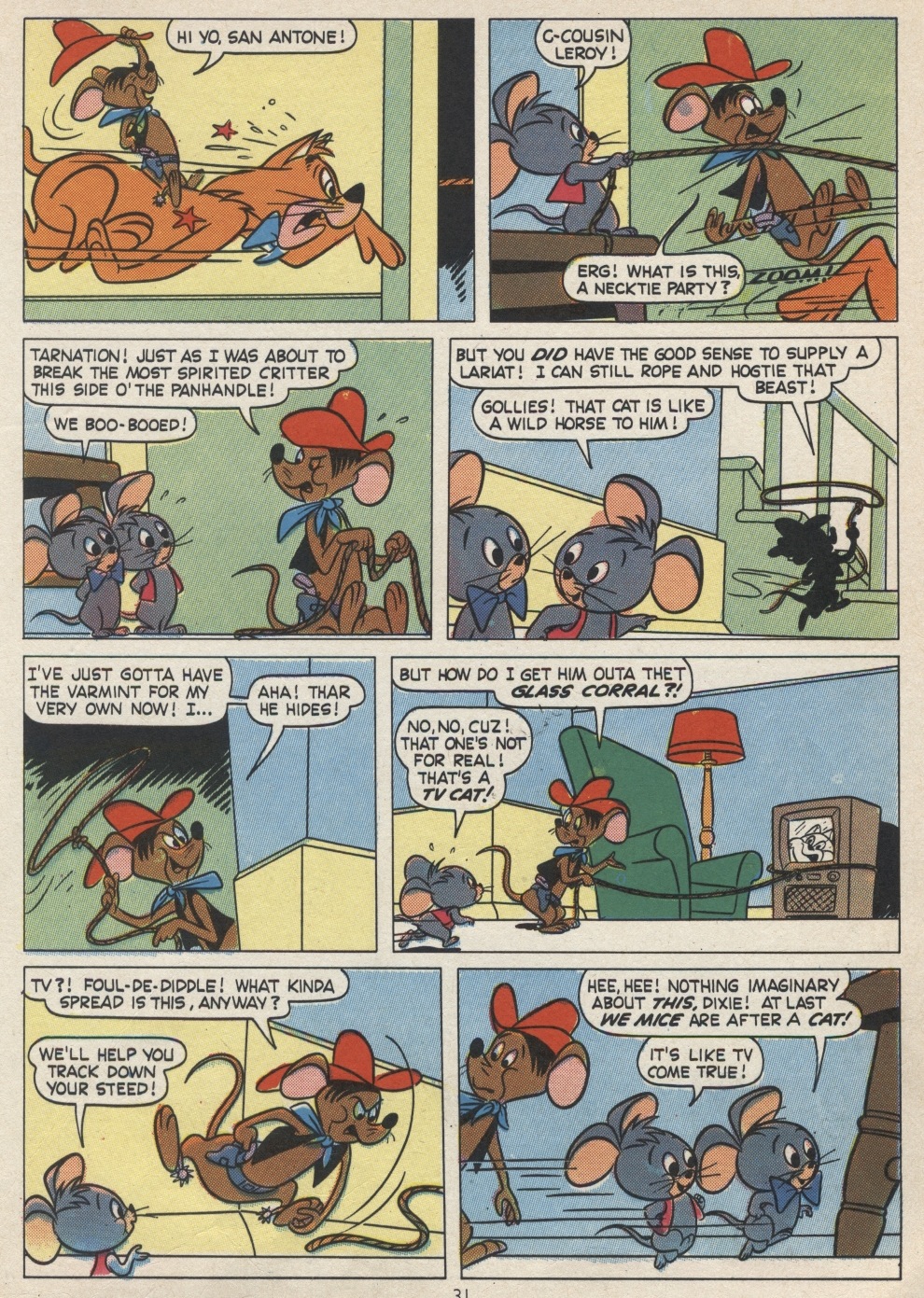

 I love both these guys and they each have their place. My own style is somewhere in between the 2 approaches. I wish I was as inventive as Gross and as controlled as Eisenberg.
JumBc!~~_12.JPG) Look at the care that went into this classic toy! So many different cartoon materials!
Look at the care that went into this classic toy! So many different cartoon materials!LlOYe!~~_12.JPG) They must have had lots of meetings to decide whether to give him eyebrows or not. Or which sides of his eyes get eyelashes, since eyelashes were rationed during the war.
They must have had lots of meetings to decide whether to give him eyebrows or not. Or which sides of his eyes get eyelashes, since eyelashes were rationed during the war.!!mk~$(KGrHgoH-E!EjlLl0T+JBKQ)KtTenQ~~_12.JPG) Nice 2 -toned cape.
Nice 2 -toned cape.KV6nUw~~_12.JPG) Mighty Mouse was a caged circus animal. With a fully developed package.
Mighty Mouse was a caged circus animal. With a fully developed package.KDise!~~_12.JPG)
K+Yk!Q~~_12.JPG) Thanks to Mike F. for this jolly discovery!
Thanks to Mike F. for this jolly discovery! This was my first Clampett experience, and I don't even mean the whole cartoon; I mean just the opening. Right from the opening title cards I felt an uneasiness, like something weird and momentous was about to happen.
 It starts out with a pretty normal pan of a farm, but layed out with odd angles that make it move in a slightly creepy way.
 Then it just cuts to Daffy walking. I always assumed he was part of the pan, but no, it's a jump cut that I never noticed till now.
 This walk is rife with tension, animated by Izzy Ellis. It's a double bounce - which is usually used to make a character seem happy. Something about this walk though is anything but bubbly or happy.
 When I saw this for the first time, an anticipation of dread gripped me, like Daffy was expecting the world to come to an end. I never had weird feelings like this watching cartoons before.
 And Daffy looked so different than what I was used to. He was more angular, scrawny and his poses were dynamic and really communicated what he was feeling - new more specific feelings. He's waiting for something that must be more important than life itself. What was it?


 More great poses!
 I was astounded at how clear and stark his poses were. Like a caricature of the cartoon principles of silhouettes, line of action, anticipations etc. No timidity like the poses in a Friz cartoon.
 He says "sufferin' succotash!" which I had only heard Sylvester say before. I wonder who said it first. Clampett said that when they recorded Mel Blanc's voice for Daffy, he liked the way it sounded better than after they sped it up, so when he created his first Sylvester cartoon he suggested using the same voice and not speeding it up.
 I love this action that really accentuates the dialogue.
 Mel and Carl Stalling are in top form in the cartoon. It's amazing how Clampett coordinated all his talents to contribute to the unique intense feelings you only feel in his cartoons.

 "Why don't he get here?" Listen to how the voice and music work together perfectly here.


 This head shake is great too.


 My eyes were bugging out of my head watching these unapologetic poses.
 Nice ass anticipation there...
 I think this was the first time I noticed smears too and they work perfectly here.
 Here's a nice jump cut to the mailbox in a different position. Clampett's camera angles add a lot of dynamic tension to his cartoons.
 I think this is a different animator.


 Man was I creeped out by these realistic 3 fingered man hands - which Mike Fontanelli told me are outlawed in Japan.
 Yikes! It's hilarious but really sick. Like a mutant from Hell has come to violate Daffy's sacred mailbox.
 Another bold jump cut
 All this is just the beginning of the cartoon and it made me feel like I was seeing - not "seeing" but feeling something different in a cartoon. I was used to laughing at my favorite Chuck Jones or Tex Avery cartoons and admiring the artwork and animation, but this was my introduction to a kind of comedy that had the extra element of intense feeling and empathy for the character. I was sucked into Daffy's emotions and felt everything he felt, instead of just laughing at him from the outside world. Clampett has this way of sucking you into the screen by making the story come out of the characters' emotions, rather than just stuffing them into a neat and tidy preconceived plot.