Thursday, May 29, 2008

Cartoon Skin VS Lumpypants

Eddie is fascinated by wrinkles, by real ones and he tells me theories about them all the time. This got me to thinking about how wrinkles are treated in cartoons.

CARTOONSKIN


Real wrinkles are really different than cartoon wrinkles.
Ever wonder why clothes fit so tight on old cartoon characters? Why the wrinkles don't look anything like real wrinkles?
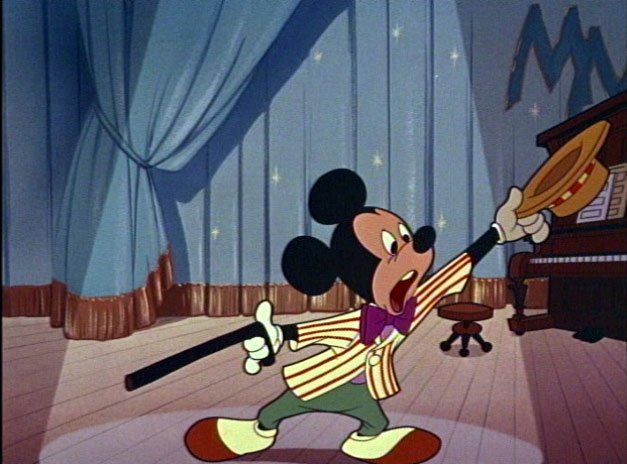


Well it's for a logical practical purpose. It's much easier to move solid non-ambiguous forms through space to create smooth animation. Realistic wrinkles are way too elaborate and complicated to be able to control while animating. They are hard enough to draw as single images, let alone move. Anytime anyone tries it, the characters just seem to melt all over the screen. They have no form.
That's why wrinkles are kept to a minimum in old cartoons, and why they are generally very tightly wrapped around the forms of the characters. It makes an interesting surface look. It's called "cartoon skin".
The wrinkle physics of cartoon skin are applied to all surfaces of classic cartoons: flesh, fur, clothing.
[max_hare.jpg]

Even Rod Scribner who loves wrinkles and draws lots of them, still doesn't draw them remotely realistic. He just does looser floppier cartoon skin and creates a very funny effect.


ENTER THE AGE OF LUMPYPANTS


When I got started in the business they had abandoned cartoonskin in favor of a new form of equally unrealistic fabric surface - "Lumpypants".

This design approach is meant to be more sophisticated and serious than classic cartoon surfaces but it is doubly ironic:

1) It doesn't remotely look anything like the way wrinkles really look.
2) It's impossible to animate and makes the characters morph and melt all over the screen.

So in effect, it's both ugly and impractical at the same time, which seems to be the 2 general goals of animation ever since the late 60s.

Ugly and impractical equals "quality" in the minds of people who don't like cartoons, because it is so obviously not cartoony or fun.

Classic Disney used cartoonskin.

Disney - when it really was a "quality" animation studio used cartoonskin, even in its more elaborate high-minded features.
It was depressing drawing designless formless blobs in Saturday Morning cartoons in the 80s, but it was even more shocking to lovers of classic cartoons when "Disney" in the late 80s brought Saturday Morning cartoon design and Lumpypants to bigscreen big-budget fully animated productions.

LUMPYPANTS hit the big screen

There was a time when there was an obvious difference between quality cartoons and Saturday morning cartoons. You could tell instantly by the look of the designs what was a quality cartoon. Once Disney changed over to the Saturday Morning look it changed forever the automatic distinction between good and amateurish and gave tasteless executives even more control over big budget animation.

In effect we have DIC design fully animated.

Along with lumpypants came Saturday Morning cartoon storylines, too much exposition and explanation, bland music, Saturday Morning Cartoon colors and just general Saturday Morning Cartoon thinking all around - except with humongous budgets that somehow are supposed to magically turn all the bad creative decisions into quality.


The transition: Little Mermaid has a body and fish ass made of cartoon skin, but her hair is made of Ghostbuster Lumpypants.
The image “http://www.imyspacegraphics.com/images/the-little-mermaid/IMG0003.jpg” cannot be displayed, because it contains errors.


More on wrinkles in another thrilling article coming soon - comic book wrinkle theory

character Paintings

I like the brush technique in these top 2 paintings. They are very clean and crisp and each brush stroke has style. The colors are not too stimulating though, just basic primaries and secondaries.

The colors in the Flintstones ones are positively garish, even though the brush technique is good.

These colors are more subtle, although probably a bit dulled from the scans.


All these paintings are expertly done and very cartoony and fun.

Wednesday, May 28, 2008

Happytime With Uncle Mike's Toy Closet


Here's something a little more mature for you to think about than those superhero comics you grownups are reading.


By the way, these are all great to draw from.
This group shot will help you with cartoony forms in perspective.


If you put this costume on while mowing the lawn, you will mature fast, I promise.

Monday, May 26, 2008

I Need A Damn Flash Programmer

I had a couple guys say they were interested in making me some add-ons to make Flash more animator-friendly, but they have since vanished into the ether.

I want to develop some new tools to use on George Liquor and show off to other animators.
There's money in it.

McCain, Barack color keys


Saturday, May 24, 2008

Pizza Doodletime - The Phantom

Eddie and I got to talking about why Mike hated superheroes, and I said it was a great American tradition that should be ever preserved, but in its more innocent purer state.

Then we tried to figure out who invented the first superhero and we guessed it was Lee Falk, creator of the Phantom.

I remember reading The phantom in the funny papers in the 60s and knew it had been around forever. I don't think he actually had any superpowers, but he had the more important thing that defines superheroes: he went around in public in his underwear. I don't know how that was ever invented, or whether it evolved out of something else. I would like to think that it just occurred to Falk or somebody as an inspiration. Imagine thinking to yourself: "I've got it! I will create a crime fighter who goes around in his underwear beating people up! And no one will question it!"

Then I tried to remember what he looked like. He had a pretty bland costume I recalled. But Eddie, who's more conscious of silky man-fashions than me reminded me that he had purple striped briefs as an accent over his leotards.
Eddie and I spent some time debating which side of your hand the thumb went on.
The first Superheroes were pretty sedentary. The artists hadn't discovered action poses yet.
It took Jack Kirby to invent the idea of drawing fighters in action poses.
Eddie said he remembered the Phantom couldn't fly, so he rode a horse instead. And the poor criminals only had mere cars and bullets.

Then I took to doodling some more superhero types.


We wondered whatever happened to the Cheerios Kid? I imagine he grew up and still gets his go powers from dried stale starch rings.
What's great about superheroes is that they are as preposterous as talking funny animals but are meant to be taken seriously. As if there were dramatic stories starring the 3 Stooges. Even stranger is that I've met people who take comic book writers seriously and I've witnessed people arguing over whose stories make more dramatic sense.

I wonder if Falk was outraged when Siegel and Shuster came along and gave a man in underwear magical powers, destroying the believability of a crime fighting man in underpants on a horse. Can he have imagined that one day there would be hordes of undergarment crime fighting heroes and the whole world would totally accept the concept as normal?

It must be a great job though to get up every day and think up new adventures for underpants. I'd like to do that in my retirement and see if I can get a horde of fans too take me seriously.

Superheroes are a great American tradition and I kind of wish they would go back to being More mainstream in cheap throwaway comics on newsprint so every little kid could grow up normal, instead of just a few super nerdy kids (and adults!) who have to go out of their way to specialty comic stores for blurry photoshopped angry superheroes with pointy anatomy on expensive slick paper.

Bring back Mort Weisinger!

Friday, May 23, 2008

More BG Layout Notes - HIERARCHY of Form and Composition


BG Layout artists, or the persons who will help me design the main scenes and setups will have to be able to draw a variety of types of forms, and use some basic principles of design and composition to make the scenes compose well with the characters.

The BGs should provide an instantly readable organic environment for characters to play out their stories.

Hopefully some of these qualities below will help you see what I am aiming for:

TREES - Build Trees out of overall forms, don't start with the details.


Each of these trees has an interesting overall form. Even the foliage is contained in a form; it's not a mess of random leaves.


When you go outside, squint your eyes when looking at trees. Try to see the form of the tree, rather than getting lost and confused in the details of leaves, bark and branches.


Each kind of tree has its own unique plan, and each member of each kind of tree has its own unique variation on the same overall plan.


Buildings/Cars- Man Made Organic Geometry
Man-made objects, such as houses and machines are made of simpler more geometric forms than nature's forms, but to be well-designed, they still have to have appealing, solid forms.

And, they also have to have variety in the shapes, details, textures, arrangement of forms.

Lots of negative shapes!

Composition. The biggest forms in the picture have to make the overall statement instantly. A viewer shouldn't be distracted by a lot of cluttered details and an absence of negative shapes.

What details there are should be much smaller than the bigger forms they help describe. They wrap around the bigger shapes- going in the same directions. Not in a strictly 100% mathematical way. there should be very slight organic imperfections, but not so much that they destroy the forms they are part of.


The bricks, windows etc. on the walls below are not drawn with a ruler; there are no 100% parallel lines. Edges have slight curves. Not all the shapes mirror each other.

The details are not evenly spaced apart.

The background is composed to make the character read easily in his environment.

This is the kind of thoughtful control I would like in the layouts of my cartoons. No haphazard wonky flat modern look.

Stylish but planned.

A car is more organic than a house, but still has an overall form, and again: the details wrap around the form. They don't go off in their own directions.
The door follows the form of the side of the car, the lines on the seats follow the shape of the seats, etc.
Nature - Organic Forms, but still forms
Good BG design makes the largest forms in the picture make a statement: a controlled purposeful instantly readable composition.

The details are less important.
The details follow the same perspective and physics as the larger forms.

Not all areas of detail are filled equally. There are sparse areas or completely empty areas.

THE DETAILS ARE MUCH SMALLER THAN THE LARGER FORMS

This is so important. If the details get too large, or stick out of the silhouettes of the larger forms, they make it harder to see an overall form.
This Frazetta drawing looks elaborate and detailed, but follows the same ideas and planning of the more cartoony art above. All the little details - the bark texture, the moss, the flowers and mushrooms are much smaller than the twisted solid tree root. The tree root is the important graphic statement.

If the details were too large, or didn't flow around the root, or stuck out of the silhouette of the root more, you wouldn't feel or see the root so clearly.

There are sparser areas of detail on the root-between the areas of moss, for example.

I don't need anything this detailed in my cartoons, but the principles are what I am after.

The big picture should be solid, interesting and instantly readable as what it is - and not get in the way of the characters..

HARVEY EISENBERG APPLIES ALL THESE IDEASHIERARCHY OF FORMS AND COMPOSITION
APPEALING SHAPES
NEGATIVE AREAS
DETAILS FOLLOW FORMS

A VARIETY OF FORMS AND TEXTURES

ALL COMPLETELY CONTROLLED TO MAKE AN EASY TO READ FUN PICTURE

SO DOES MEL CRAWFORD
STYLE WITH CONTROL


Wednesday, May 21, 2008

Jimmy Models over the years


If you wanna learn to draw Jimmy, do it the same way you studied George. Copy the first few poses exactly, proportions, construction etc. to get used to him. The drawings near the bottom are harder because the poses are more complicated, so don't start there.
This is my favorite face of Jimmy above. I've never been able to recapture his joyful look of discovery with a hint of evil.

Here's Jimmy after a diet of potato chips and sodas.
Now he starts getting complicated. Don't be distracted by all the wobbly details. They all flow along his central line of action and basic silhouette.

Pros Apply now

Storyboard
Storyboard poses can be kinda rough, like these funny Rex drawings. They don't have to be "on-model" but the artists have to understand his construction and personality. (the other characters too)

Each pose has to be :
Clear and distinct
In Character
In context of the scene and story
Fun


You have to be able to do rough BGs and good composition too.


BG Design-key layout setups

I would like to work with an artist or 2 to plan the key scenes of the cartoons-designing the main BGs and the most important poses. These key setups would then be given to storyboard and layout artists to fill in the continuity.

http://johnkstuff.blogspot.com/2007/03/scene-planning-for-tv-setups-for_2292.html
I'll be looking for good background design and composition.

Layout Character posing

The layout artists will draw the finished poses for the animators. These drawings have to be tighter than SB poses, but not perfectly clean. They have to be appealing, functional, tell the story and look like the characters and BE LIVELY.


If you have stuff to show me, then this week is the time to do it, because I am writing now and will be ready to board within a couple weeks.

I will happily give tips in person (or in photoshop sent in emails or blogged) to anyone who has their style and have been practicing getting close to the show style.

These 3 jobs require experience. If you are just breaking into animation, then I suggest you go for inking. I'll do a post about that soon.


Thanks!

It's gonna be a lot of fun. Once you can draw the characters well, I will encourage you to bring some of your own style to the show. No tracing model-sheets here.

John

Tuesday, May 20, 2008

Old Fashioned Decent Swim Trunks

Random Story Sketches

these will be explained in more detail on the secret blogs for the artists who are preparing for production


greasy spoons that George Might hang out in


This guy would always be pissed at George.


barack for Kali

Monday, May 19, 2008

Graphic, but based on the real


Harvey Eisenberg is a great conservative layout man. He can draw any object from any angle and compose a scene so that everything reads perfectly. Note that his BG elements do not at all look mechanical. Every shingle and brick is organic, yet fits within the patterns and forms that they sit on.
I would love to find a couple BG artists who could draw this well. Vincent Waller can and he drew great layouts in my cartoons and comics. He's of course in great demand even at wonky studios.


Milt Gross studies the real world. He has knowledge of many types of furniture, not just one stock chair or couch or cabinet.

He puts the appropriate types of furniture in the houses he draws, depending upon whether it's a mansion, or a regular middle class house. He cartoons them just enough to make them fun and he draws the rooms from really interesting angles.

He plays with the perspective just enough to goof things up and make 'em fun and wacky without being "wonky".


"Wonky" is when the window shapes are completely different shapes than the houses they sit on. Or everything in an image is on a different angle. Each house is on a crazy angle and nothing on the house actually follow the same angle. You see it all the time in modern cartoons. It's when the smaller shapes do not fit within the larger ones and the whole image of the scene is a chaotic jumble instead of an instantly understandable whole.


Here's a great down shot of a bedroom that reads perfectly, even though the perspective is very slightly off.

Obviously Gross really does understand perspective, and can make it form the most fun visual statements:
Gross is a master of composition. His BGs don't compete with the characters. They compose around them and give the scene specific flavor.


Here are some panels from my comics where we tried to make our BGs somewhat cartoony, while still using them to compose well with the characters:Of course, they aren't on the same level as Gross, Eisenberg or Ketcham and I'm not looking for an artist to imitate the "Spumco style". I just want to try to show the general goals I have for framing my stories and characters in atmospheres and environments.

I'm looking for an earthy down-home feel to the BGS. Not looking for high-style modern hipster style. I want the environments to feel like what real life feels like , only through a funny artist's perspective.


I need cartoonists who remember odd details and unique weird elements of growing up. This scene above is inspired by my own youth.

My Dad (like many Ottawa Dads in the 60s) was always building stuff to add to the house. This was an unfinished bathroom we had downstairs in the basement that must have stayed unfinished for years. It was dark and dingy and the walls were never completed. It had a funny smell , unique to moldy basements. I need BGs that evoke the actual smells of the different environments my artists have experienced.

I don't want every scene treated in the same hipster-impress the executive-flat, wonky style. If you are a cartoonist with a love for cartooning real life and environments and want to get our audience to feel the atmospheres and odd nooks and crannies that impressed your life (and you can draw perspective and have a wide knowledge of what things look like), then I want to bring your ideas and experiences to the world.


Jim Smith drew lots of great scenes in my cartoons and comics and is likely to do many more on the George Liquor Show. He could use some help. We all want to sit around and laugh about weird things that happened to us and sketch out the feelings of the environments they happened in..and try to draw them in styles that evoke the smells the best, not just draw every scene in the same house style.

COMPOSITIONS AND ANGLES TO REVEAL THE CHARACTERS
http://johnkstuff.blogspot.com/2007/08/dan-gordon-funny-animal-comics.htmlDan Gordon is great at designing his scenes with atmosphere. Atmosphere generated by the point of view of the characters. Look at all the great angles in his panels, and the motivated characters that are moving from scene to scene. It's all designed and framed to make you feel like you are part of the story.

Gordon invites you in and you become one of his dog gang and experience the world from their point of view.

In my George Liquor Show, I am going to tell stories from different points of view, Each character sees the world at different angles and in a different atmosphere of his own impressions and emotions.

George's POV is conservative and stable, Jimmy's is more cockeyed. The animals see everything from low angles and with a different understanding of how life works. Sody sees everything as fun and innocent with a touch of filth. The bad Catholic girls see the world for what it is: dirty low down, grimy, unfair, get what you can while it's available and confess later.

Saturday, May 17, 2008

I need a Background Designer - some 60s house reference

with experience!

I'm starting to design key sets and environments from the show.

The George Liquor show takes place in a 60s style world. Mainly a lower-middle class environment where decent folk live.

His neighborhood would be made up of houses not only from the 60s, but dating all the way back to the 20s and even earlier.

Here's some ref I found on the net.
I would want a designer who doesn't merely draw stock cartoon bgs, but someone who is really interested in the way things really look, and likes to caricature them.
Someone who likes to do research and go outside to get ideas from the real world.