


Eddie is fascinated with wrinkles. He can talk for hours about them. He makes me think about them. While we had illuminating discussion of wrinkle theory over pizza one evening, I drew this sketch of how I remembered George Wunder's wrinkle technique looked.
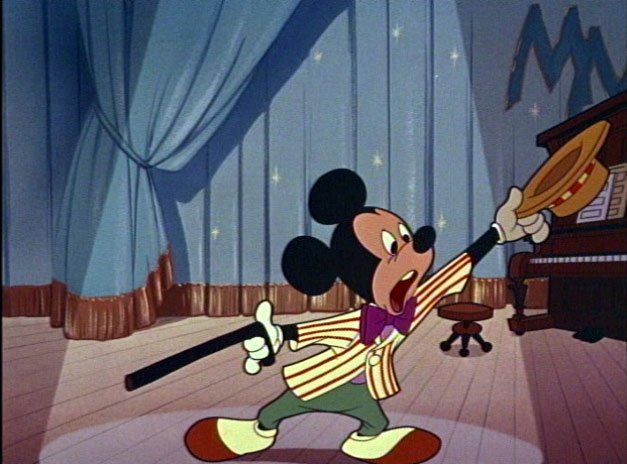
I'm personally interested in how wrinkles are drawn in cartoons and comics. Honestly, most people can't draw wrinkles for crap. Me, included. I learned the "cartoon skin" approach to wrinkles from classic cartoons.
 Bob McKimson just wraps the clothes (and fur) skin tight onto the characters.
Even Rod Scribner, who is known for liking wrinkles, just draws loose fitting cartoon skin.

See how real wrinkles look. Nothing at all like cartoons.


 Here are a couple variations of loose cartoon skin.

I think it's funny that even though this Mickey toy is actually made of fabric, they went out of their way to sew it up as tight as cartoon skin. Wouldn't it be cool to dress like this in real life?


Wrinkles are extremely complicated, and there is actually a physical science of how they work, which is much too complicated for cartoonists.

Old time illustrators like Rockwell, were wrinkle masters.


Wrinkles at one time were studied at art school. It was considered a serious part of art fundamentals. Art schools in general must have been much more serious about actually teaching you things at one time.
Eddie's theory is that art schools should be run like fascism. When I see the results of this kind of teaching 80-100 years ago and more, I tend to agree.


Comic strip wrinkles.
Milton Caniff loved wrinkles and he developed a style of drawing them that was widely copied by other comic strip and book artists. These wrinkles are more realistic ha cartoon wrinkles, but I suspect that they were copied superficially from illustrators like Rockwell.
 Comic artists and cartoonists tend to be self taught. These old time great ones had much higher standards of art to imitate that we do though and so their superficiality is still much more skilled than our generations'. That's because we are 20 steps removed from the real thing and they were only 1 or 2.

I always loved Jack Kirby's wrinkles. I don't know if they are strictly sensible, or just stylized from copying his own heroes' work.


 Kirby is especially rebellious, because he took a whole comic genre that can only be convincing with cartoon skin
  and then he went and sagged and wrinkled it up.
Superheroes wear cartoon skin underwear to show off their muscles.  When a real live person wears a superhero suit, it is much less impressive and points to how wacky the whole idea of superheroes is.
  That didn't stop Kirby from creating the first superheroes that wore realistic saggy, lumpy underwear.
![[jack+kirby.+the+fantastic+four.+no.+010.+cover.jpg]](https://blogger.googleusercontent.com/img/b/R29vZ2xl/AVvXsEiuTbRW27GKhUNNzScrRQkoxxeyfwnO9Rju_lHaEoQW2vgwbJT0atvpHUhq1WOikECv5wTyQN4h1VsvqgRkG_r0p-WM4OTghAKtmWVvfSjLCO_jsvqJzffcx7oKUwQA7lfFBQC24w/s1600/jack+kirby.+the+fantastic+four.+no.+010.+cover.jpg)
When a real live person wears a superhero suit, it is much less impressive and points to how wacky the whole idea of superheroes is. That didn't stop Kirby from creating the first superheroes that wore realistic saggy, lumpy underwear.




![[max_hare.jpg]](https://blogger.googleusercontent.com/img/b/R29vZ2xl/AVvXsEg-Fw7iPhIgRLSYrxBBCANbPna7BG22Ii0tTF4WqHsAU3PxBGMYHaKOm7DXrJlkuK1quutXNcR3FtztNweiHxRl5BIUJR-PD_yx0YYxFVP8gHsvYPnCcWv0hVdtvMx8vHcdogB5/s1600/max_hare.jpg)


